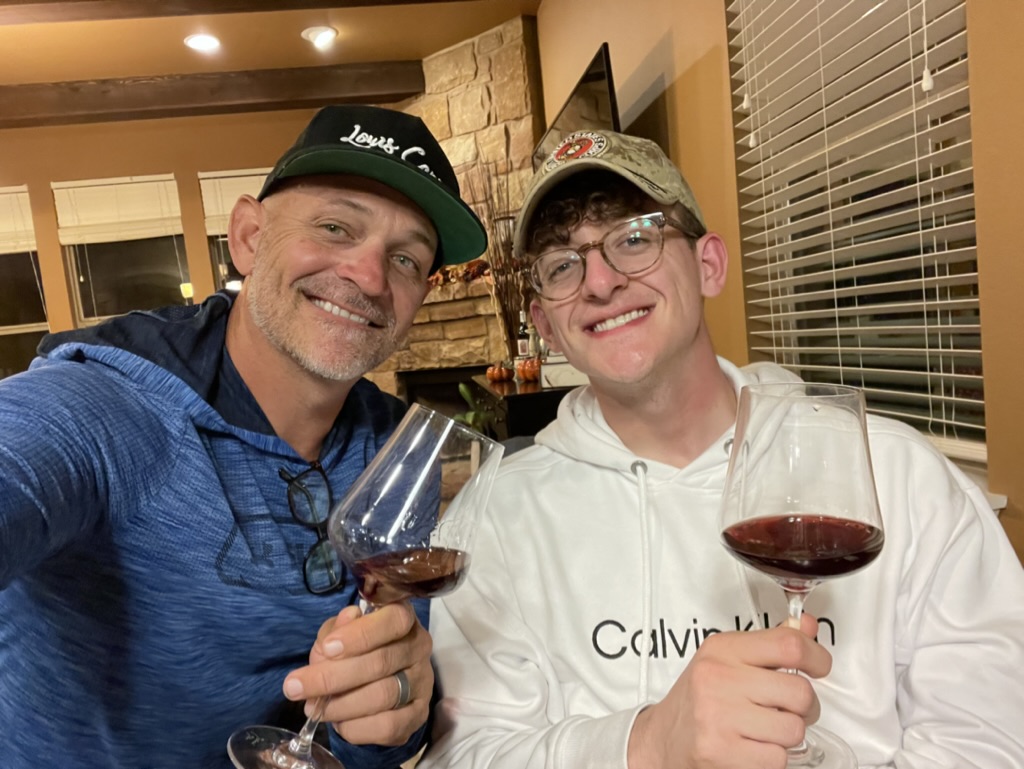
It was 11:47 PM on a Tuesday. I was deep in Claude Code, wiring up a Supabase backend for this newsletter you're reading. My phone buzzed. Text from my son, 28, across town: "Dad, check this out — I just shipped a landing page for my side project. Took me two hours."
He doesn't have a CS degree. He's not a developer. He described what he wanted to an AI and it built it.
I looked at my screen. I was doing the same thing.
Two generations. Two living rooms. Both building software past midnight. That's not a cute anecdote. That's the most significant shift in who gets to build things since the personal computer.
The Word of the Year Is a Paradigm Shift
Andrej Karpathy — former head of AI at Tesla, OpenAI co-founder — coined the term "vibe coding" in February 2025. His description: "fully give in to the vibes, embrace exponentials, and forget that the code even exists."
Collins Dictionary named it Word of the Year for 2025. MIT Technology Review listed generative coding as a 2026 Breakthrough Technology. This isn't a trend. It's a before-and-after moment.
The numbers back it up. 63% of active vibe coding users aren't developers at all — they're founders, product managers, marketers building real products. 41% of all code globally is now AI-generated. Y Combinator reported that 25% of its Winter 2025 batch had codebases that were 95% AI-generated.
$100 Million in a Month, 146 Employees
If you want proof the market is real, look at Lovable. The vibe coding platform added $100 million in revenue in a single month — February 2026 — with 146 employees. They crossed $400M ARR and are valued at $6.6 billion. NVIDIA and Alphabet's VC arms are investors. More than half of Fortune 500 companies use it.
That's $2.77 million in ARR per employee. People predicted that number wouldn't happen until 2030.
The tooling has gotten insane. Claude Code, Cursor, Replit Agent, Bolt.new — you describe what you want in English, and they write the code, run the tests, deploy the app. You never touch a terminal if you don't want to.
The Honest Tradeoffs
I'm not going to pretend it's all magic. It's not.
45% of AI-generated code has security flaws. AI-authored code shows 75% more misconfigurations and 2.74x higher vulnerability rates than human-written code. Edge case blindness is real — the code handles the happy path beautifully and crumbles on malformed data.
96% of developers don't fully trust AI-generated code. And they shouldn't. Karpathy himself followed up his original vibe coding post by introducing "agentic engineering" — the idea that AI-assisted coding needs professional oversight and engineering discipline, not just vibes.
The failure mode is predictable: someone vibe-codes an app, it works in demo, they ship it to production, and it falls apart under real conditions. The New Stack called it a potential source of "catastrophic explosions" in 2026.
But here's what the critics miss: nobody said vibe coding replaces software engineering. It replaces the gatekeeping around who gets to try.
The Democratization Nobody Expected
My son can't write a database migration. He doesn't know what a foreign key is. But he can describe what he wants, iterate on the output, and ship something that people actually use. That wasn't possible two years ago.
A 15-year-old can now ship a production app by asking Claude targeted build prompts rather than writing code. A product manager can prototype a feature in an afternoon instead of writing a spec and waiting three sprints. A founder can validate an idea before raising money to hire developers.
This isn't replacing developers. It's exploding the number of people who can participate in building. The best analogy isn't "AI replaces programmers" — it's "the printing press replaced scribes but created a million more writers."
92% of US developers use AI coding tools daily. The senior devs I talk to call themselves "AI babysitters" now — and they say it's worth it. Their role shifted from writing code to reviewing, directing, and architecting. The craft isn't gone. It's elevated.
What I'm Watching
-
Vibe Coding with Claude Code as a Complete Novice by PromptDervish — The most honest account I've found of what it's actually like to build your first app with Claude Code. No hype, just a real person figuring it out.
-
Complete Vibe Coding Tutorial: Build a Full Stack App in 30 Min by Matt Palmer — Watch someone go from zero to deployed full-stack app in 30 minutes. If you've been on the fence about trying this, this will push you over.
-
Washington Post: Claude Code Builds a Website in Minutes — The Washington Post put Claude to the test building a site live. Mainstream media getting this right is worth your time.
The Bottom Line
I texted my son back at midnight: "Ship it." That was the whole conversation. No code review. No architecture discussion. Just a father and son, both building, both shipping, both using tools that didn't exist 18 months ago. The gatekeepers of software are gone. The only question now is what you're going to build.